
Approval Gates for Autonomous Agents
An agent that can run commands crosses from generating text into changing systems. Safety depends on narrow capabilities and an approval that binds a person to an exact, inspectable action.
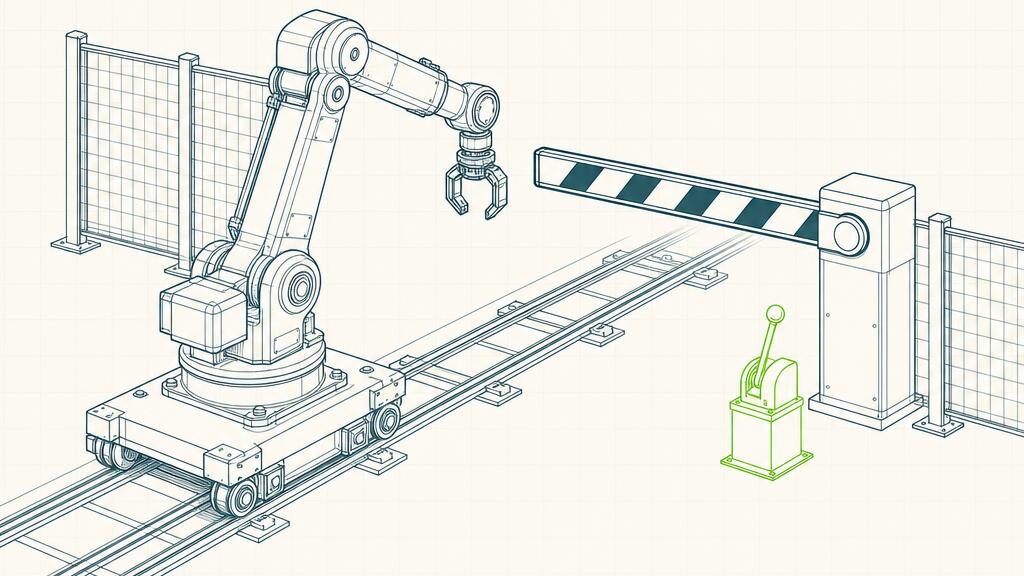
An autonomous agent becomes operationally significant when its output can invoke a tool, run a command, modify data or trigger another system. At that boundary, a plausible natural-language plan is not an adequate control. Models can misunderstand instructions, be influenced by untrusted content and produce syntactically valid actions with unintended scope. The execution architecture must constrain what is possible before considering whether a proposed action looks suspicious. A capability allowlist defines the permitted verbs, resources and parameters; a human approval gate deals with context-specific authority inside that boundary. Neither control substitutes for the other, and both need a durable connection to the eventual execution.
Denylist filtering fails structurally
A denylist assumes harmful actions can be enumerated. Command languages defeat that assumption through aliases, interpreters, redirection, encoding, environment expansion and combinations of individually harmless operations. Blocking a destructive utility does not block a script that opens files directly; blocking an argument string does not constrain what a downloaded program does. The same problem appears in APIs where a generic request tool can reach unanticipated methods and hosts. An allowlist reverses the burden. The system exposes a small set of typed capabilities with known semantics, rejects everything else, and validates structured parameters rather than attempting to infer intent from a shell string.
Capabilities should be narrower than tools
Allowing a shell is not a narrow capability. A safer interface might expose reading within one workspace, applying a validated patch, or invoking a named build target with fixed arguments. For infrastructure, separate viewing a deployment, preparing a release and promoting an approved artefact. Each capability defines resources, permitted transitions, input schema, output limits, identity and timeout. Avoid a general-purpose escape hatch that nullifies the rest of the design. If exceptional raw access is operationally necessary, keep it outside the autonomous path under a different identity and procedure. The agent should only see tools that its assigned task can legitimately require.
- Expose typed operations with fixed semantics instead of arbitrary shell or network access.
- Scope resources to the task, workspace, environment and expiry of the current run.
- Render the exact proposed effect and relevant diff before requesting human approval.
- Bind approval cryptographically or transactionally to an immutable action digest.
- Record execution output, resulting identifiers and postconditions against the same request.
Identity and authority are separate concerns
The platform needs to know which agent run proposed an action, which service identity would execute it and which person authorised it. A model must not inherit the full authority of the person who started a conversation. Issue short-lived, task-scoped credentials to the executor and enforce permissions at the target system as well as the orchestration layer. Approval may add authority for one transition without disclosing reusable credentials to the model. Delegation rules should state which people can approve which environments and resources, including separation where the proposer must not be the approver. A shared automation token erases these distinctions and makes later attribution unreliable.
Freeze the proposal before approval
The request should include a canonical operation, target identifiers, parameter values, expected effects, policy evaluation and references to inspected artefacts. Compute a digest over that representation and place the request in a pending state. Any change creates a new request and invalidates prior approval. This prevents a time-of-check to time-of-use gap in which a branch, package version, query or command changes after review. Mutable aliases deserve special treatment: approving deployment of “latest” does not identify an artefact. Resolve aliases to immutable versions or content digests before the gate, and show both the human label and resolved identity.
Present consequences, not model reasoning
A chain-of-thought narrative is neither stable evidence nor a substitute for reviewing effects. The approval view should show the operation in domain terms: files changed, records affected, environment, destination, permissions requested and relevant policy exceptions. Diffs need bounded context and clear treatment of generated or binary material. Database actions should show the statement class and constrained target population, with a separate workflow for broad or irreversible changes. The agent can provide a concise stated rationale and source references, but the reviewer needs independently derived facts from the execution system. If the interface displays only the agent's paraphrase, it asks a human to approve the same interpretation that may be wrong.
The approval record should answer who authorised which exact effect, under which policy, using which evidence, and what happened afterwards.
Treat untrusted content as data
Agents routinely inspect repositories, tickets, web pages and documents that may contain text resembling instructions. That content must not grant capabilities or alter system policy. Keep control instructions separate from retrieved data, label provenance, and avoid tools that automatically execute code discovered during inspection. An allowlist limits the damage of prompt injection but does not eliminate it if allowed operations are broad. The approval view should identify when important parameters originated in untrusted content, such as a destination URL copied from an issue. Reviewers also need a trusted rendering path so malicious formatting cannot conceal a command or substitute one identifier visually for another.
Design state transitions for retries
A useful workflow distinguishes proposed, policy-rejected, awaiting approval, approved, executing, succeeded, failed, expired and cancelled states. Transitions should be atomic and append-only in the audit history. Execution consumes an approval once unless the capability is explicitly idempotent and the same request can be retried safely. Network timeout creates uncertainty: the target may have accepted an action even when the orchestrator saw no response. Use idempotency keys and reconcile target state before trying again. Cancellation can prevent an unstarted action but cannot pretend to reverse one already accepted. Compensating actions need their own plan, policy evaluation and approval where they carry material effect.
Approval scope should match reversibility
Not every operation warrants the same interruption. Read-only access to a permitted source may run automatically, while writes to production, credential changes and external communications require explicit gates. A policy can account for environment, blast radius, data sensitivity and reversibility. Batch approval is safe only when the batch is itself immutable and its common effect is intelligible; it must not become a way to hide hundreds of unrelated decisions. Standing approvals should be narrow, time-limited and parameter-bounded, with visible consumption. A person authorising repeated test deployments under one policy is different from giving an agent indefinite permission to execute arbitrary future commands.
Execution needs containment
Approved does not mean unconstrained. Run tools in an isolated environment with restricted filesystem, network egress, CPU, memory and duration. Supply only the credentials required for the capability and revoke them after use. Validate parameters again at execution, because policy or resource state may have changed while approval waited. Stream bounded progress without allowing output to become another instruction channel. Secrets should be redacted at source rather than scrubbed optimistically from logs. Where possible, check postconditions independently: the intended version is active, the expected file digest exists, or the target record entered the requested state. A zero process exit code alone is weak evidence of completion.
Audit records must support reconstruction
Retain the initiating task, agent and model version, capability schema, proposed parameters, immutable digest, policy result, displayed approval material, approver identity, timestamps, executor identity, target response and verified postconditions. Sensitive prompts and outputs need proportionate access and retention, but deleting all context makes incident review impossible. Records should link related retries, cancellations and compensating actions without rewriting earlier events. Monitor unusual rejection rates, repeated expiry, broad scope requests and divergence between predicted and observed effects. These are signals that capability design or task decomposition needs attention, not merely that reviewers should click more carefully.
Make autonomy incremental
Begin with observe-only capabilities and compare proposed actions with experienced operator decisions. Introduce narrow writes in non-production environments, then add approval gates with explicit policy and measured failure handling. A capability can move towards automatic execution only when its semantics, containment, idempotency and postconditions are well understood; higher autonomy is not a default maturity stage. Review allowlists as the underlying systems change, removing obsolete operations rather than accumulating permissions. Command-running agents become governable when free-form reasoning ends at a typed boundary and every effect beyond it is scoped, inspectable, attributable and reconciled with what the target system actually did.



Apply the thinking to your system.
Share the architecture, constraints and decision you are facing. We will respond to the engineering problem in front of you.