
Owning the Server Your Application Runs On
Moving from a managed platform to a controlled machine exchanges bundled operational services for explicit responsibility. The decision turns on workload shape, constraints and the organisation’s ability to operate what it owns.
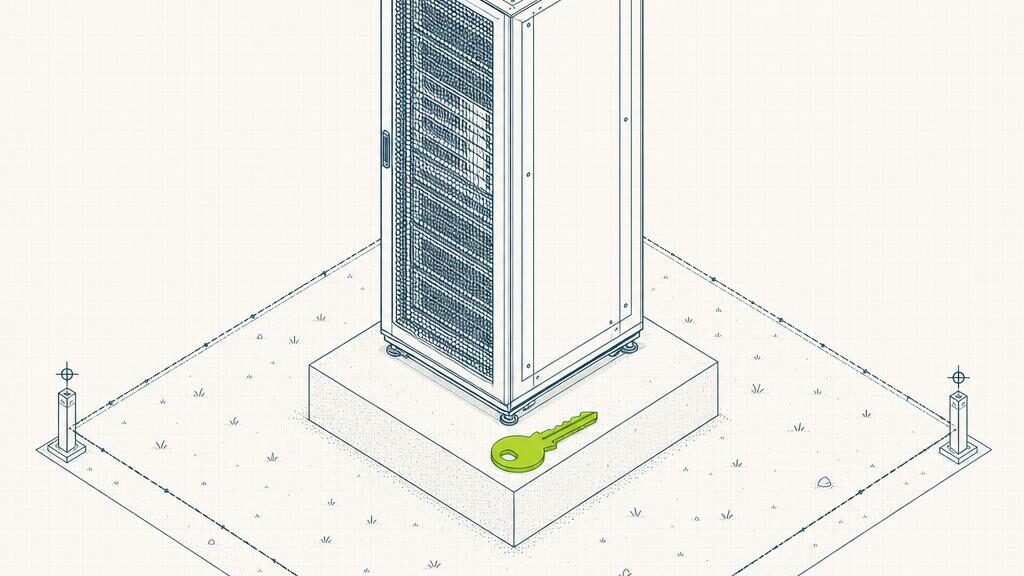
A managed application platform and a machine under direct control can run the same process while presenting very different operating models. The platform typically bundles build execution, routing, certificates, process supervision, logs, scaling primitives and some security maintenance behind an application-oriented interface. A controlled virtual or physical server exposes more of the operating system and network, leaving those functions to the team. Neither choice is inherently more serious or more economical. The relevant question is which responsibilities, constraints and failure modes the organisation is prepared to own over the application's lifetime, including periods when no feature work is scheduled.
Compare the service boundary first
“Managed” covers a wide range. Some platforms manage runtime patches and deploy immutable builds but leave database operations separate; others include databases, queues and observability with distinct guarantees. A virtual server provider usually manages physical hardware and virtualisation while the customer owns the guest operating system upwards. Dedicated hardware changes that boundary again. Inventory the components the application depends on and mark who patches, backs up, monitors and restores each one. Price comparison without this map treats omitted work as free. It also obscures shared dependencies such as DNS, object storage and identity that remain managed even when the application process moves.
Cost follows workload shape
Managed platforms commonly price reserved runtime capacity, requests, build time, transfer and attached services. This can fit small or variable workloads because unused operational capacity is not staffed internally and scaling can follow demand. A server offers a relatively fixed capacity charge, making sustained, predictable utilisation easier to budget, but administration, standby capacity and recovery infrastructure sit elsewhere in the cost model. Compare an actual traffic and storage profile, including peaks, background jobs, database connections, egress and non-production environments. Do not annualise a quiet test month or assume the machine's invoice represents the complete cost of keeping the service recoverable.
- List every runtime, database, queue, storage, routing, certificate and monitoring responsibility.
- Price normal load, expected peaks, non-production use, backups, transfer and recovery capacity.
- Identify platform-specific APIs, build assumptions and state before estimating migration effort.
- Document residency and subprocessors for data, logs, backups, metrics and support access.
- Assign patching, alert response, restore testing and incident authority to named operational roles.
Lock-in exists at several layers
A container image does not make an application portable if it depends on proprietary identity, queues, object semantics, deployment metadata or network policy. Conversely, standard protocols on a managed platform can make relocation straightforward. Identify lock-in in source code, data formats, build pipeline, runtime configuration, operational knowledge and commercial contracts. The highest cost is often state: moving a large database with a tight interruption window is harder than starting the process elsewhere. Portability has a carrying cost too. Abstracting every provider feature can produce an internal platform with weaker tooling. Preserve exits for material risks, but use platform capabilities deliberately where their operational value exceeds the realistic switching concern.
Data residency requires a complete data map
Choosing a server region does not establish residency by itself. Application records may remain in the selected location while logs, crash reports, backups, support snapshots, email delivery and analytics cross other boundaries. Managed services should be assessed through their contractual and technical data paths, including subprocessors and administrator access. Direct server control can narrow some paths, but the host and network provider still participate, and the team may introduce global monitoring or off-site backups. Classify data before selecting infrastructure, minimise sensitive content in telemetry, encrypt transfers and storage, and verify deletion and restoration behaviour. Residency is an end-to-end property of processing, not a pin on a region map.
Operating-system ownership is recurring work
A controlled server needs a supported operating system, package sources, patch cadence, hardened access, firewall policy, time synchronisation, disk management, process supervision and reboot planning. Administrative access should use individual identities through a controlled path, with emergency access recorded and reviewed. Configuration belongs in versioned automation so replacement does not depend on remembered shell history. Automatic security updates can reduce exposure but still require awareness of restart and compatibility effects. Unsupported libraries inside the application remain the application team's concern under either hosting model. The distinction is that direct ownership adds the kernel, system packages and host configuration to the maintained surface.
Deployment must create replaceable systems
Copying files onto a long-lived server is easy until the machine must be recreated. Build an immutable artefact once, verify its identity, and deploy through a recorded process with health checks and rollback. Separate configuration from the artefact, deliver secrets through a controlled store, and avoid environment drift caused by manual package installation. Blue-green or rolling deployment may be unnecessary for a single low-criticality service, but the interruption and rollback behaviour should still be explicit. Database migrations need compatibility across the deployment sequence and a recovery plan; restoring an old application binary does not reverse a destructive schema change. A platform may supply these mechanisms, while direct hosting requires choosing and operating them.
The machine is replaceable only when configuration, state, deployment and recovery exist somewhere other than the machine itself.
Backups are claims until restored
Define recovery point and recovery time needs from business consequences, then design backups accordingly. Database snapshots, transaction logs, uploaded objects, encryption keys and application configuration may require different schedules and restoration sequences. Keep recovery copies outside the primary server's failure and credential domain. Encryption is useful only if keys remain available during disaster. Run restoration exercises into an isolated environment and verify application-level consistency, not merely that archive files can be opened. Managed databases may automate snapshots and point-in-time recovery, but retention, accidental deletion and restore testing still need ownership. A server image alone rarely captures a consistent transactional system.
Availability depends on dependencies and response
Adding a second server does not create availability unless traffic routing, shared state, deployments and failure detection support it. A single managed platform instance may restart quickly on another host, while a single controlled machine may require operator intervention; either can still depend on one database or region. Map failure domains and choose redundancy according to service needs rather than architectural fashion. Monitoring should check customer-visible paths as well as CPU and disk. Alerts need actionable thresholds, routing and runbooks. Someone must have authority and access to respond outside normal development work. The operating model is incomplete if alerts are generated but no response commitment exists.
Security control is not security capacity
Direct ownership allows custom network topology, host controls and inspection, which may be necessary for specialised software or policy. It also permits unsafe defaults, stale packages and credentials scattered through configuration. Managed platforms reduce some host-level decisions and may provide safer deployment primitives, but application vulnerabilities, excessive service permissions and exposed data remain. Compare controls against a threat model: internet exposure, tenant separation, administrative access, supply chain, secrets and denial of service. Retain logs that support investigation without collecting unnecessary personal data. Vulnerability response must include both infrastructure notices and application dependencies, with a tested way to deploy urgent changes.
Observability needs an exit path
Platform dashboards often provide useful logs and metrics immediately. On a controlled server, collection, retention, querying and alerting must be assembled, and the monitoring system should remain available when the server fails. Prefer structured application logs, stable metric names and trace context that can be exported through standard protocols. This reduces migration friction and permits independent evidence during provider incidents. Control cardinality and sensitive fields before ingestion because telemetry cost and disclosure can grow unnoticed. System metrics should connect to application symptoms: disk pressure matters because writes or deployments will fail, not because every machine requires a decorative dashboard.
Choose according to organisational fit
A managed platform fits when its constraints suit the application and avoiding infrastructure work is more valuable than low-level control. A controlled server fits when workload economics, residency, specialised networking, legacy runtime needs or policy justify taking operations back. Hybrid choices are normal: applications on controlled compute can still use a managed database, object store or delivery network. Make the decision reversible where practical by documenting state, dependencies and deployment, then review it as workload and provider terms change. The durable outcome is not ownership of a machine. It is clear ownership of patching, delivery, monitoring, security and recovery, with enough capacity to perform those duties consistently.


Apply the thinking to your system.
Share the architecture, constraints and decision you are facing. We will respond to the engineering problem in front of you.